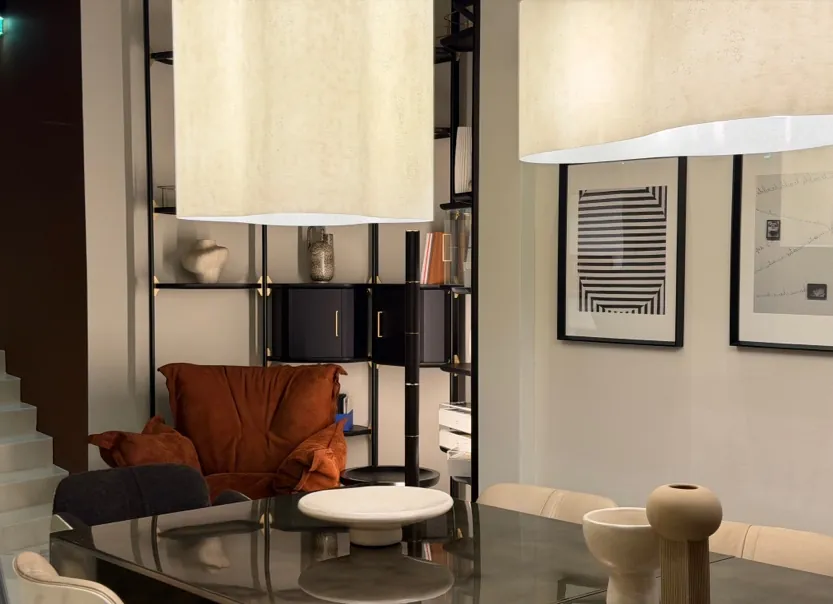
The light in Milan during April has a way of softening everything it touches. Edges blur, colors deepen and even the most constructed spaces begin to feel instinctive. During Salone del Mobile, this shift becomes almost tangible. Interiors start behaving like landscapes and objects like extensions of atmosphere.
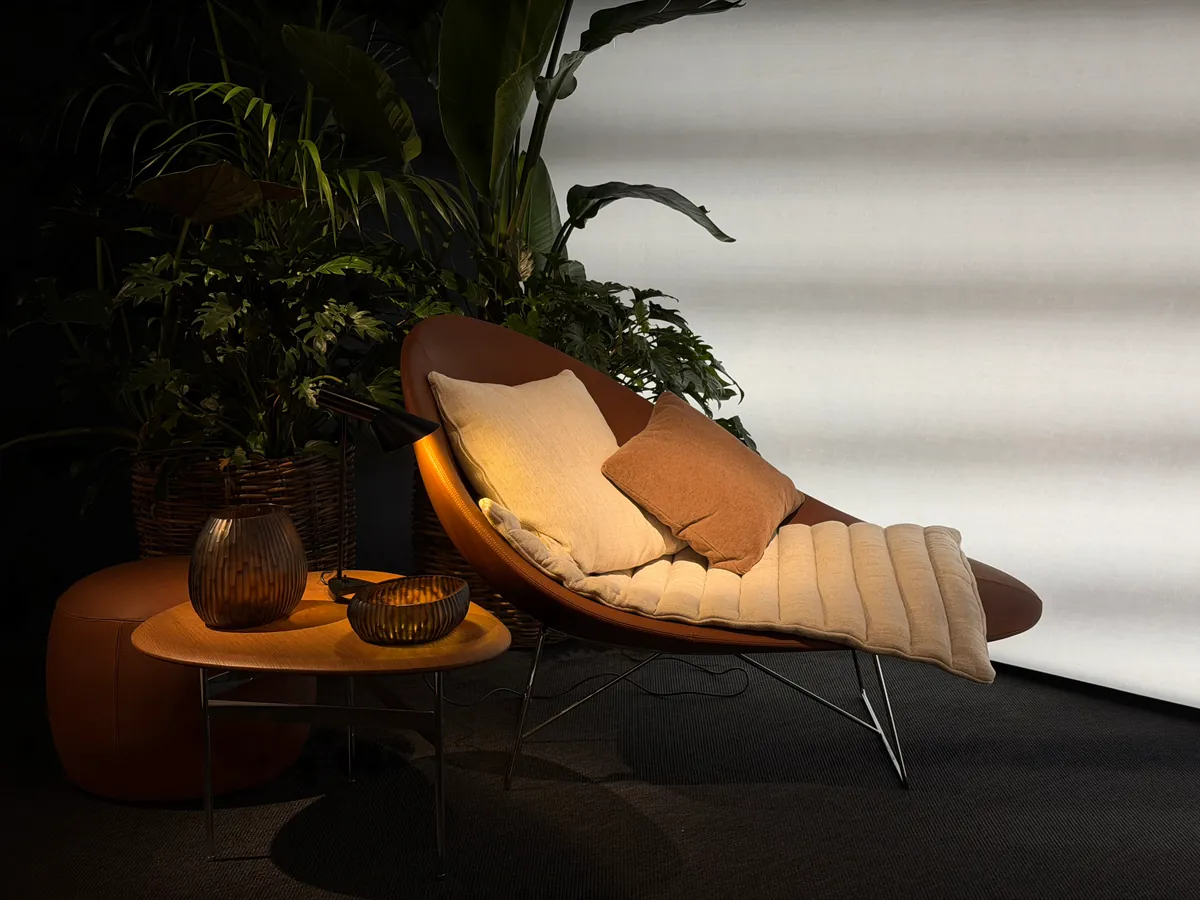
Within this setting, Talenti's presence unfolds with quiet precision. Rather than staging a conventional showcase, the brand builds an environment, one that moves fluidly between indoor and outdoor living. Warm tones, layered textures and low, generous volumes define the space, creating a composition that feels less like an exhibition and more like a place you instinctively understand.
What emerges this year is not a collection in the traditional sense, but a study in continuity. The familiar divide between indoor and outdoor dissolves through material choices and proportions. Upholstered volumes carry the softness of interior living, while woven structures and architectural frames anchor them in an outdoor vocabulary. Nothing feels displaced. Everything feels transferable.
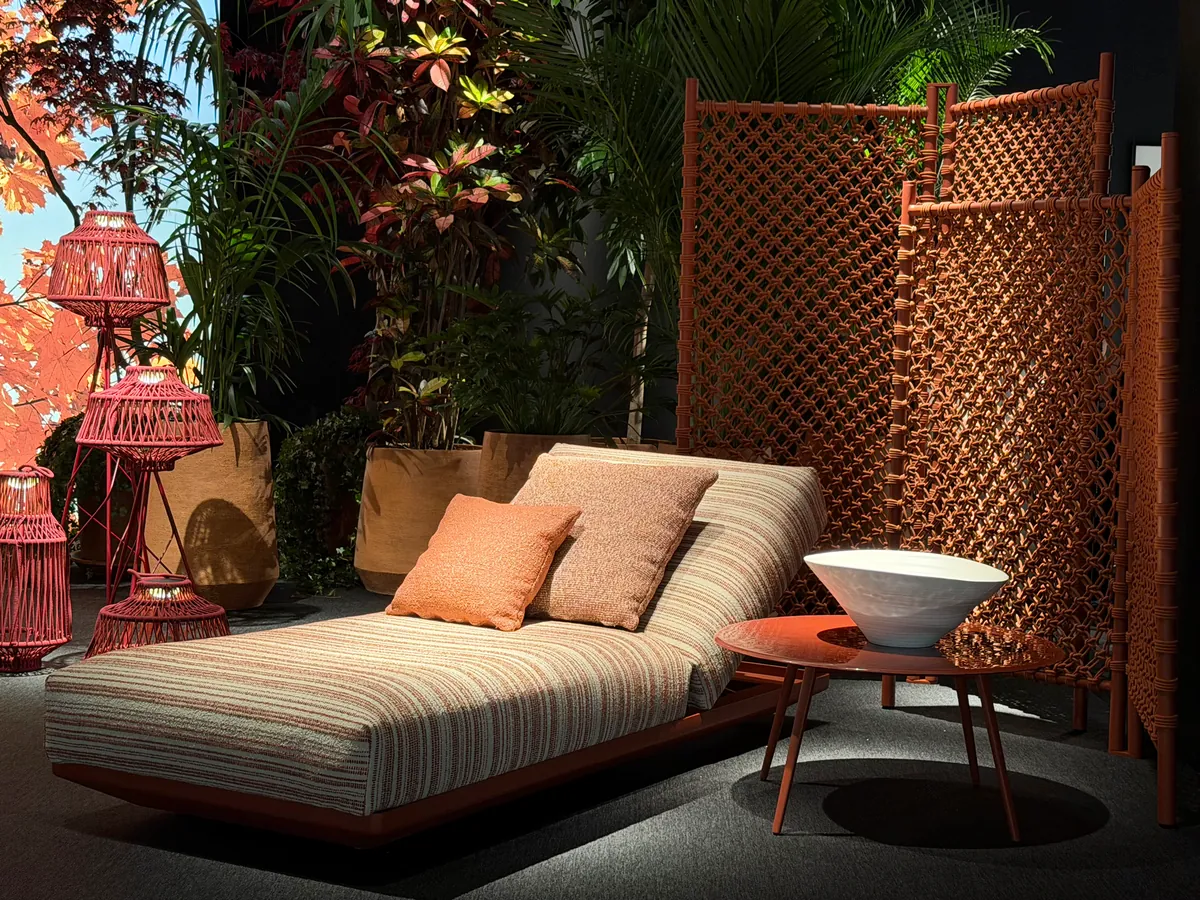
Color plays a central role, but never in a declarative way. It builds slowly. The dominant tone, a deep terracotta, runs through multiple pieces, from woven screens to structural frames and smaller accent tables. It has a mineral density to it, something sun-warmed and stable, closer to oxidized earth than to red. It doesn't pop, it settles.
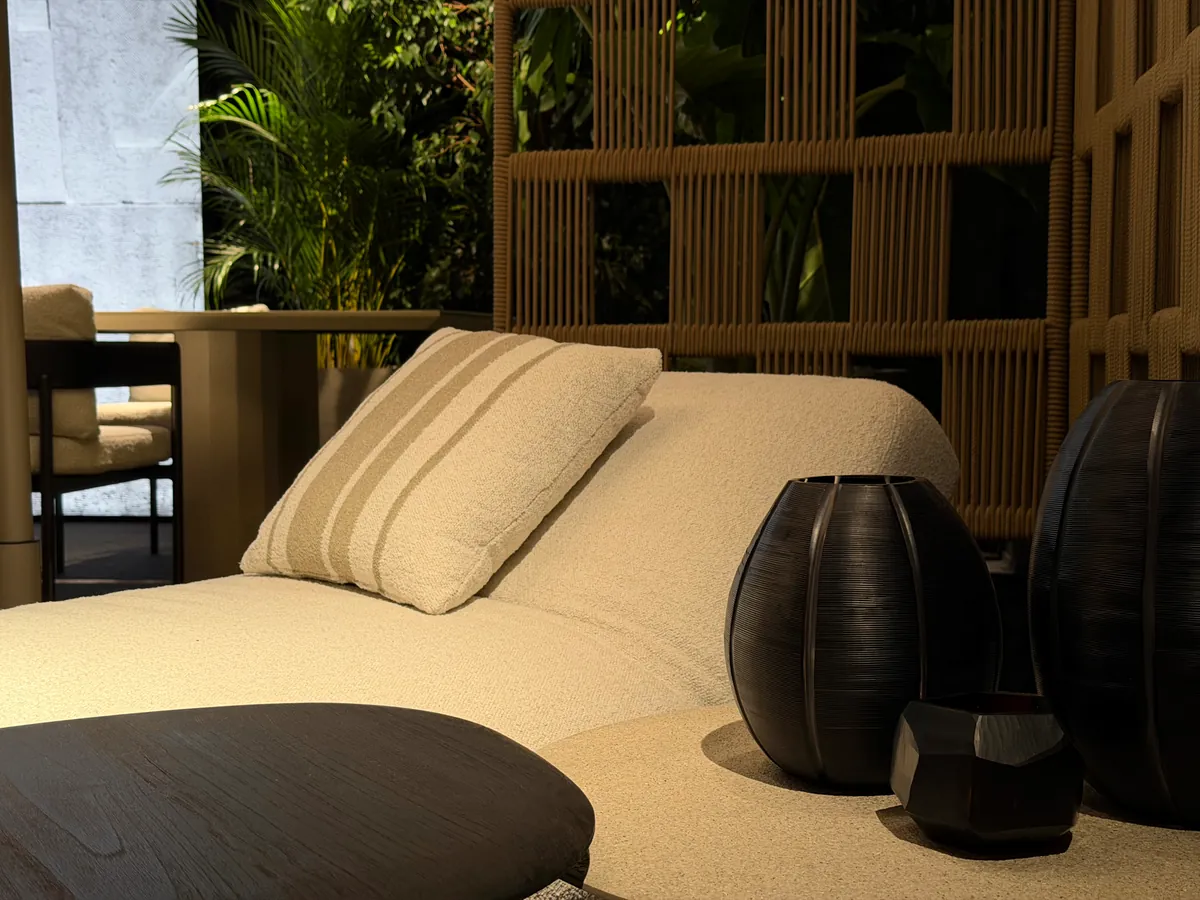
Around it, a spectrum of softened neutrals unfolds. Sand, ecru, and warm ivory textiles absorb light rather than reflect it, creating surfaces that feel almost matte to the eye. On the larger seating elements, these tones expand, allowing the compositions to breathe.
Then, sparingly, sharper notes appear. A lacquered red side table — compact, reflective — introduces a moment of tension. Elsewhere, a saturated yellow plane underlines a seating composition, not as decoration, but as a controlled disruption. These accents are never dominant, they are precise.
Materiality is where the narrative deepens. The woven elements — visible in the screens, chairs and lantern-like accessories — are not decorative overlays. They are structural, dense, almost architectural. Their rhythm creates shadow as much as form, filtering light in a way that changes throughout the day.
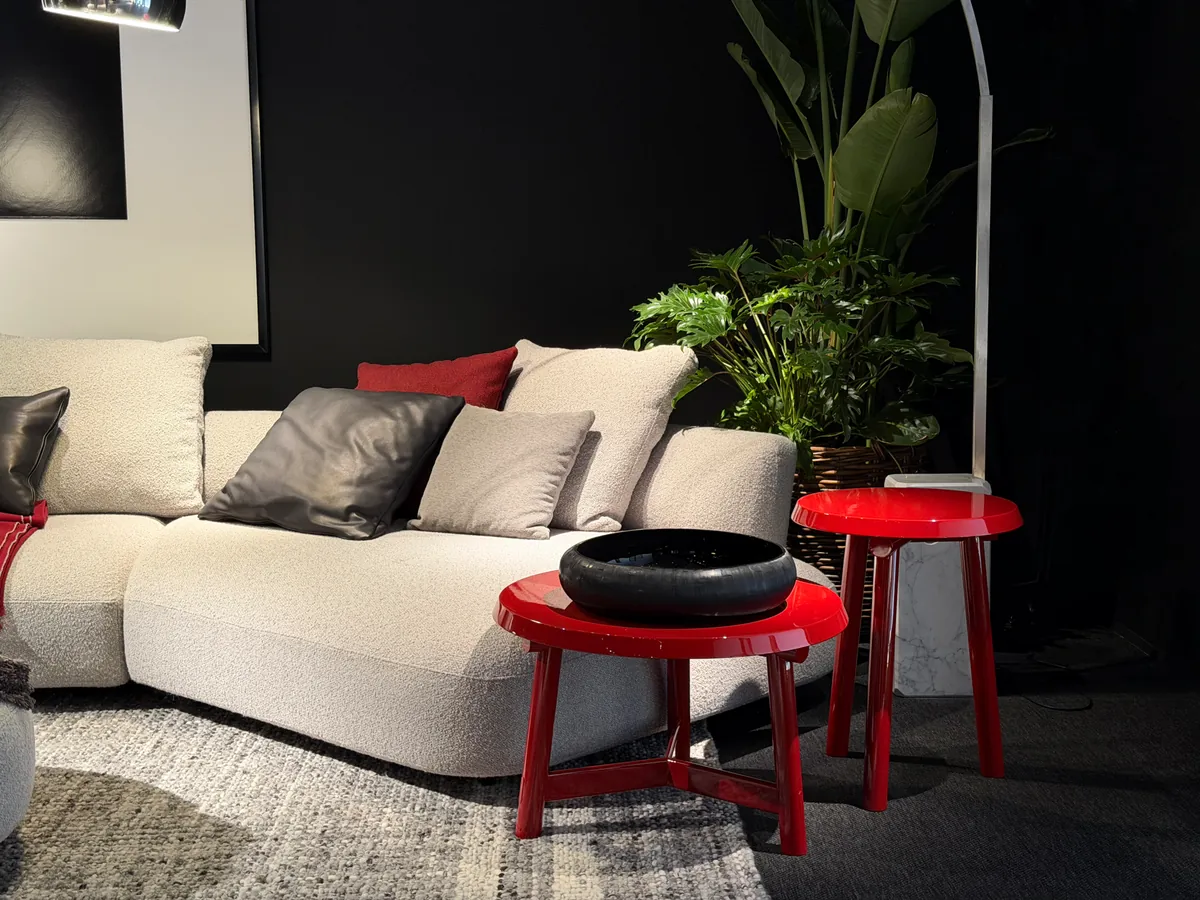
In contrast, the upholstered pieces are deliberately soft. The fabrics have a tactile depth — slightly irregular, almost bouclé in appearance — that diffuses the geometry of the volumes. Edges feel less defined, more lived-in.
Stone surfaces introduce another layer. A low coffee table in dark marble, with pronounced veining, anchors one of the interior settings. It adds weight, a sense of permanence, without disrupting the overall calm. Nearby, glossy tabletops in terracotta tones catch and reflect light subtly, echoing the surrounding palette.
Some pieces stand out not because they demand attention, but because they hold space differently.
A low chaise longue, stretched horizontally and dressed in a finely striped textile, feels almost like a gesture drawn across the floor. Its proximity to the ground shifts the body's posture — more reclined, less structured.
The dining setting, built around a round table and enveloped by woven chairs, creates an intimate geometry. There is no hierarchy in the arrangement, everything curves inward, encouraging conversation rather than staging it.
The large modular sofas operate differently. They define zones. Generous, grounded, and deeply cushioned, they become the gravitational center of each composition — spaces you don't just sit in, but settle into.
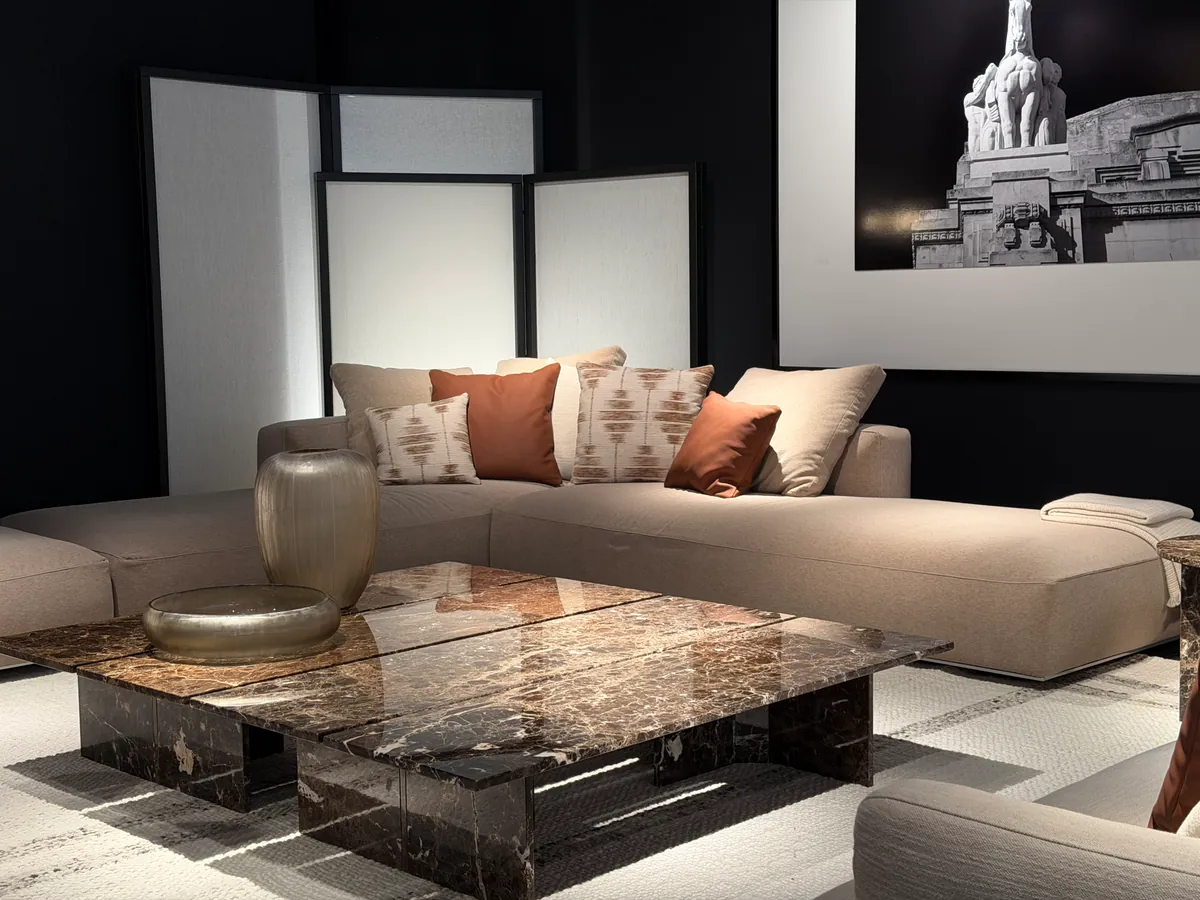
The scenography amplifies all of this without ever becoming dominant.
Vegetation is used not as decoration, but as a spatial device. Large-leaf plants and layered greenery create depth, softening transitions between areas. In one setting, a large-scale backdrop of autumn foliage introduces a saturated, almost cinematic warmth — a contrast to the otherwise controlled palette, yet entirely coherent.
Lighting is restrained but deliberate. Focused beams highlight textures — the weave of a screen, the grain of a fabric — while surrounding areas remain in shadow. This creates a rhythm of compression and release as you move through the space.
Across Milan this year, there's a noticeable shift. The long-standing preference for crisp minimalism is giving way to something more tactile, more grounded. Materials are allowed to show variation. Colors carry warmth. Spaces are designed to be inhabited, not just observed.
Talenti aligns with this direction, but without exaggeration. There is no overt statement, no attempt to redefine. Instead, there is refinement, a quiet confidence in letting materials, proportions and atmosphere do the work.
What lingers after leaving the space is not a specific object, but a state of mind. A sense that comfort can be precise. That outdoor living doesn't have to imitate interiors, it can absorb their language and reinterpret it. And that, sometimes, the most luxurious environments are the ones that don't insist on being noticed, but stay with you anyway.