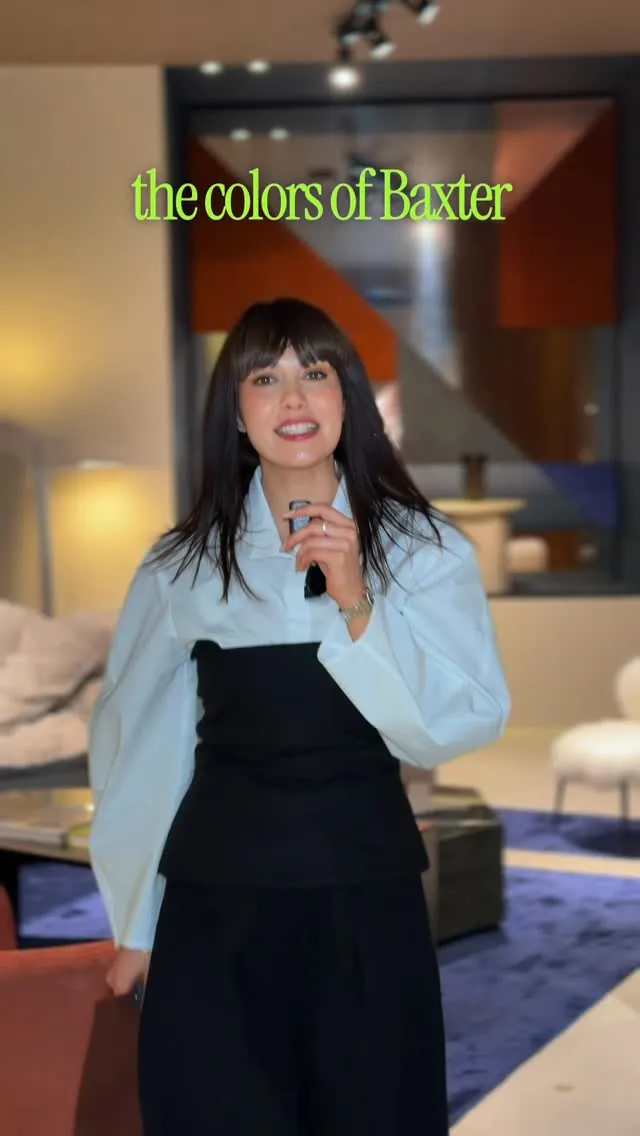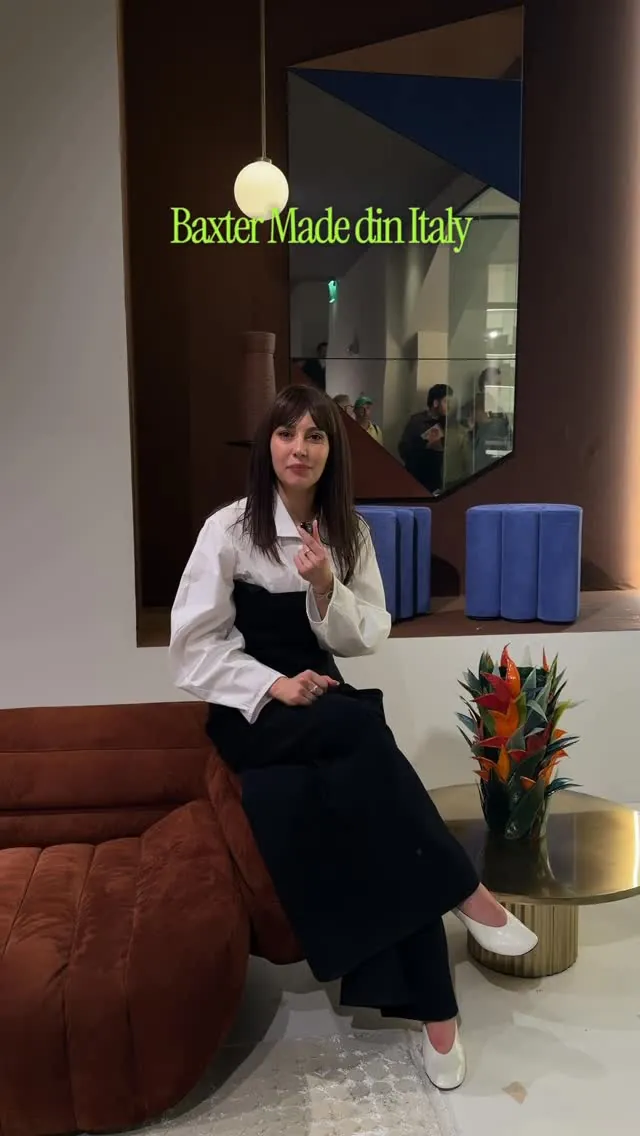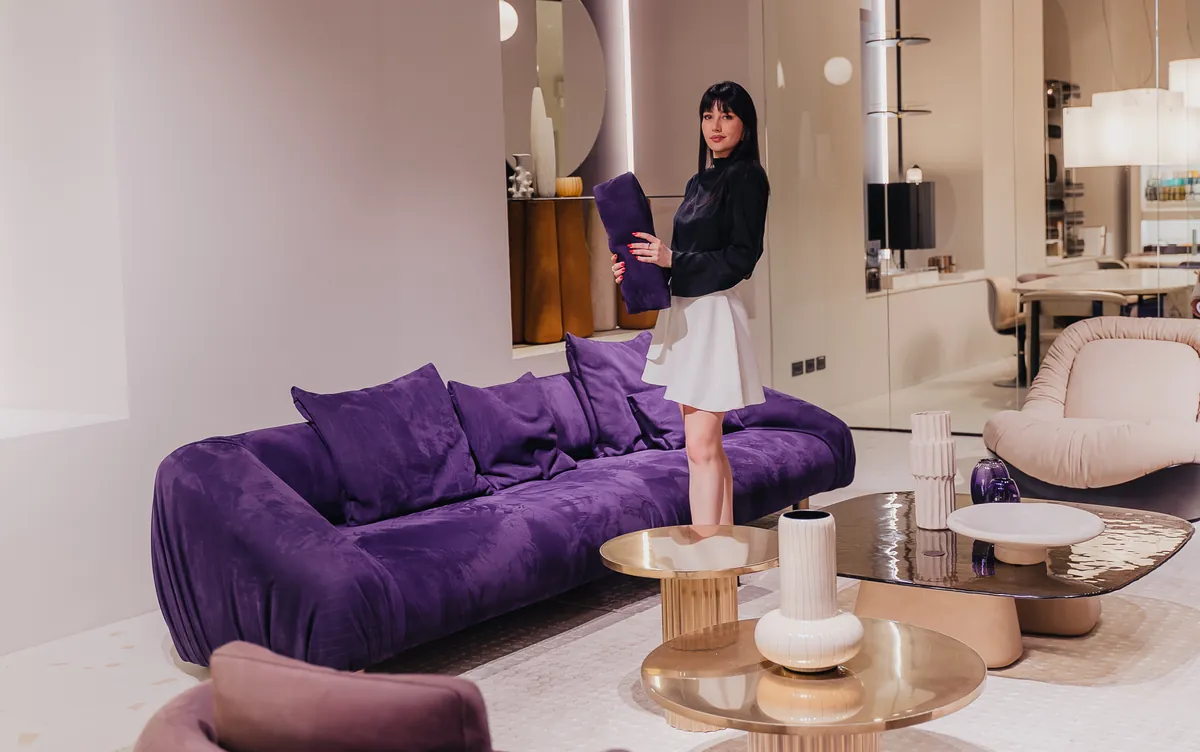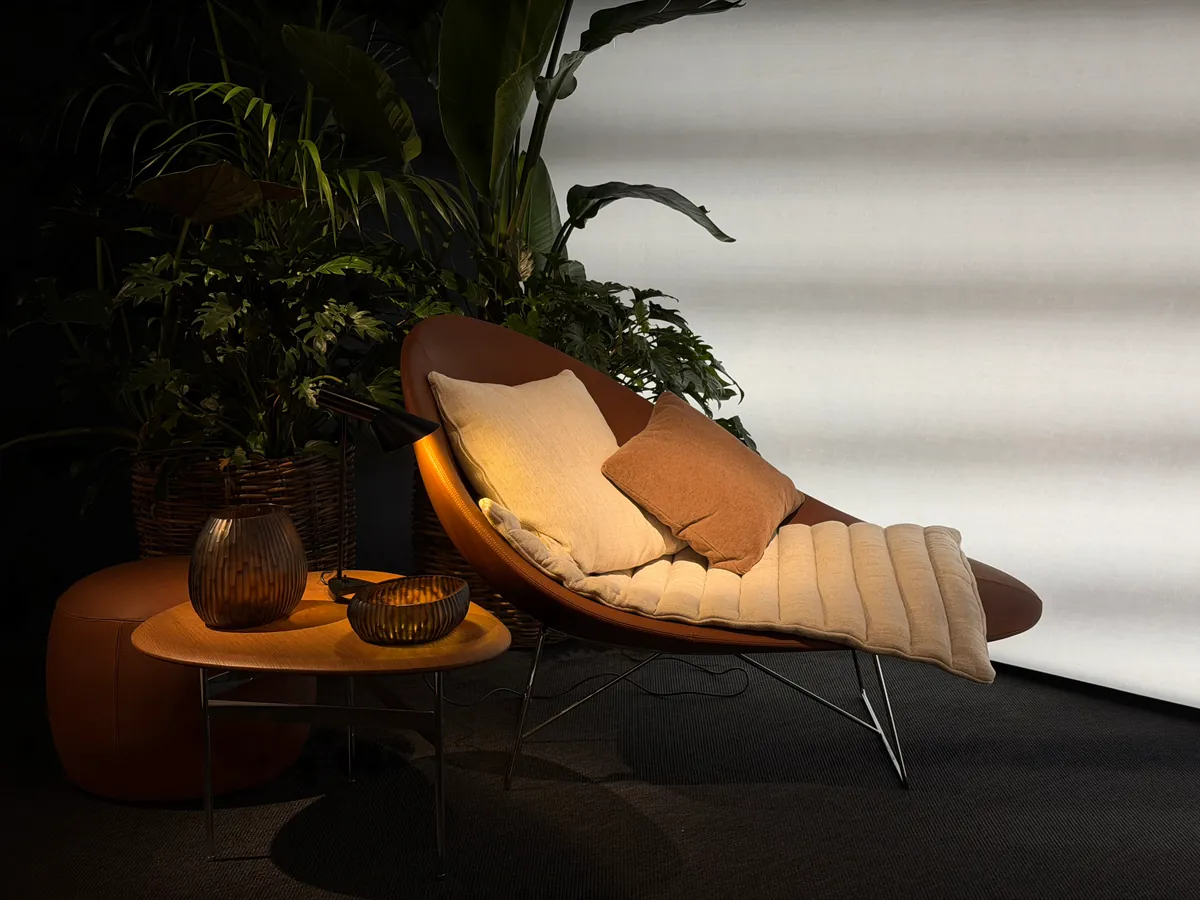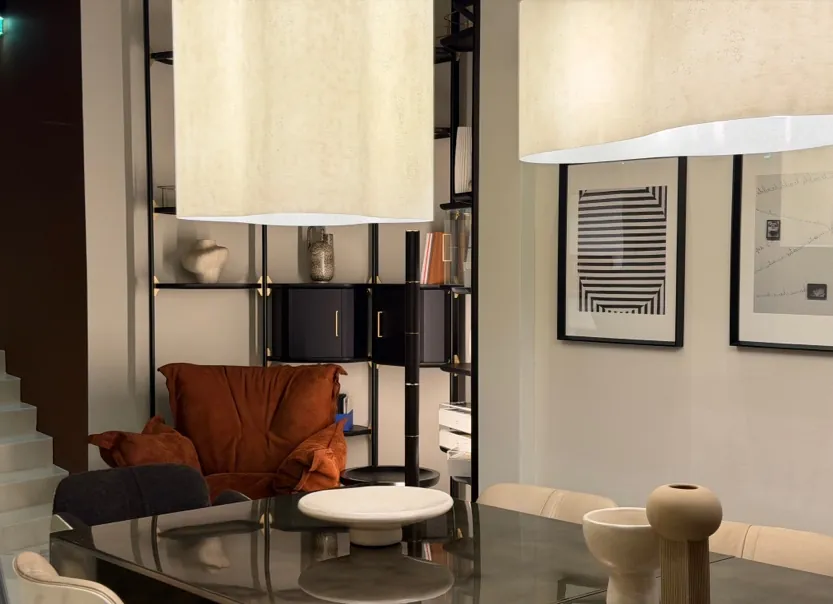
During Milan Design Week, Milan becomes a sequence of increasingly loud statements. Baxter chooses a different register. Their presentation doesn't compete through spectacle, but through density — of material, of color, of atmosphere.
This year's theme, Baxter Journey: a new person in the city, reads less like a concept and more like a subtle narrative. Moving through the showroom feels like stepping into a series of interior scenes, each defined not by form, but by surface — by how things absorb, reflect, and hold light.
A shift toward material
What stands out immediately is a clear shift: objects are no longer the protagonists, material is.
Surfaces are treated almost as landscapes — layered, irregular, sometimes deliberately imperfect. There's a tension between control and spontaneity that runs through the entire collection. Nothing feels overly polished, yet everything is deeply considered.
Color as depth
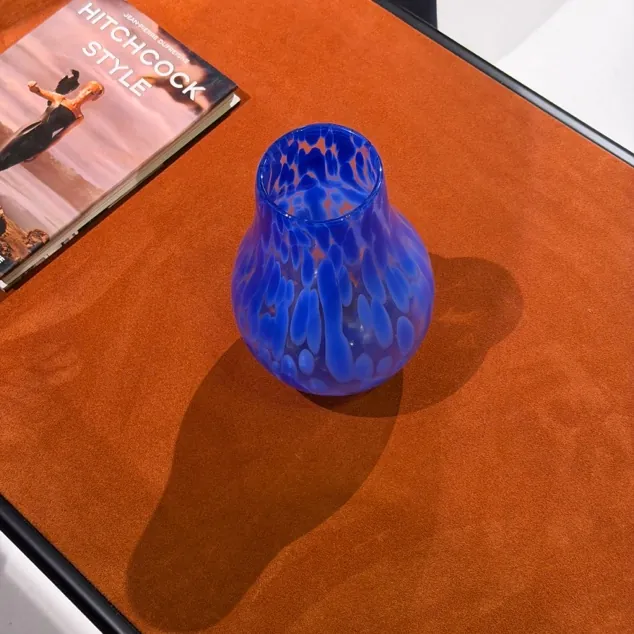
The palette builds slowly. Blues, ranging from dense, almost inky tones like Rivers Blue to sharper, more luminous notes such as Blue Bell, anchor the space. They don't sit on the surface — they seem to pull you inward.
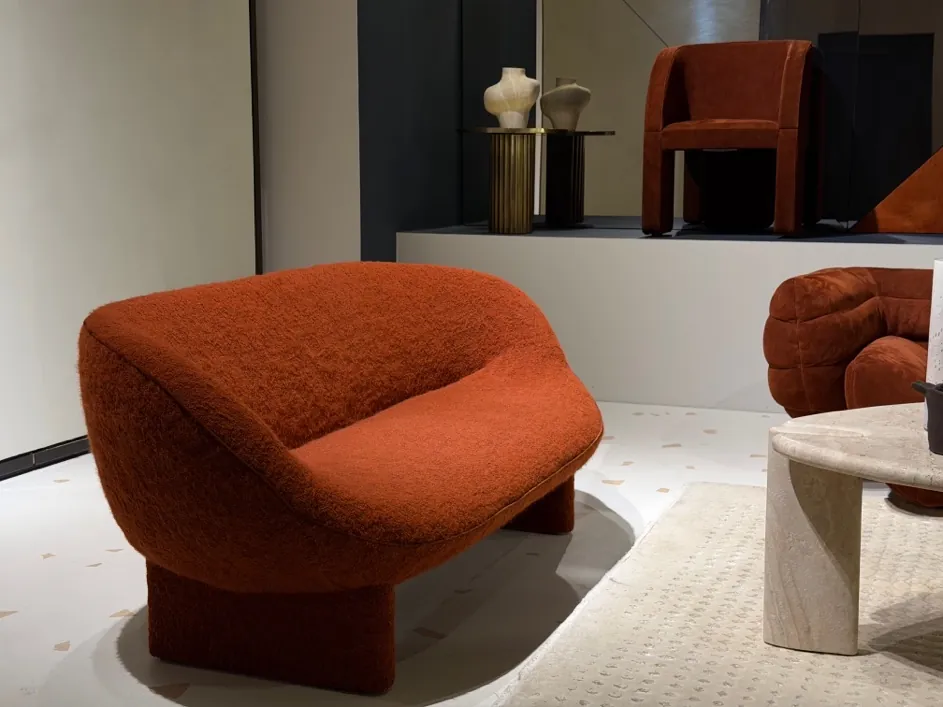
Warmer tones carry more complexity. Ebour Ocre reads like sun-warmed earth, shifting between soft gold and burnt shadow depending on the light. Reverse Sierra introduces a mineral red, almost embedded into the material, with a quiet, dusty intensity. In contrast, Oeuvre Vert moves through layers of sage, moss, and muted warmth, closer to a painted surface than a flat color. Nothing here is decorative. Color is always tied to depth.
Material as experience
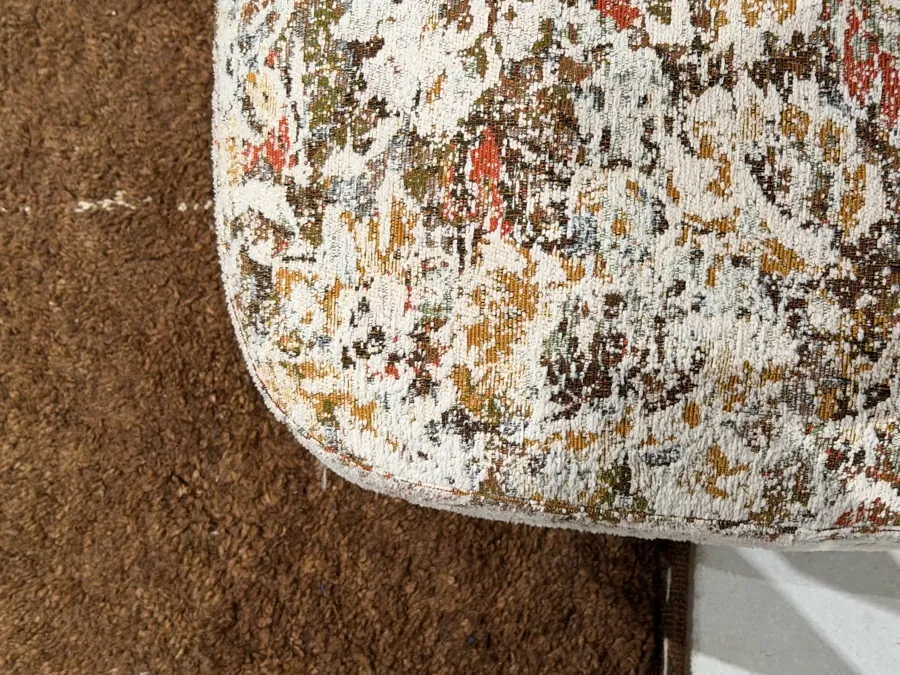
The real novelty lies in how these finishes are developed and combined. Textiles like Brocade cru feel almost topographical — raised, irregular, catching light in unexpected ways. There's a quiet complexity in how tones emerge and disappear across the surface.
The Spatulated Sand Cement finish stands out for its restraint. A soft, mineral mix of calcareous beige and fine inclusions, it absorbs light rather than reflecting it, creating a dry, almost powdery presence.
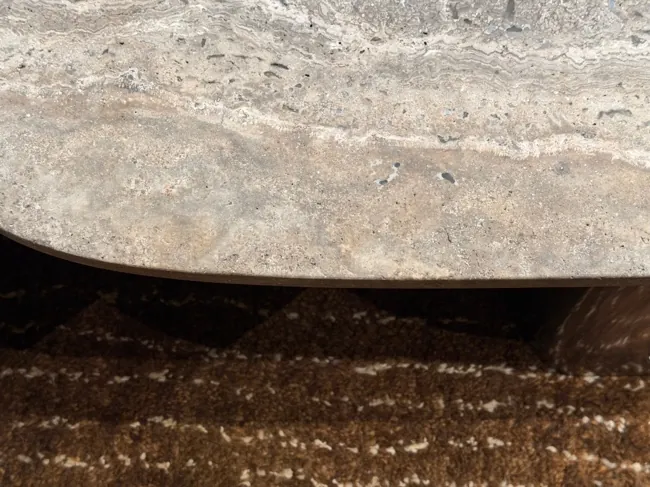
Stone surfaces continue this dialogue. Glossy Porak Marble carries a subtle tension between polished brightness and earthy undertones — veins of sand, rose, and rust running through a cooler base. In contrast, Brushed Grove Marble softens everything, its matte finish revealing a quieter composition of browns, ochres, and pale mineral breaks.
Then there are the softer materials. Telo Mongolia Taupe introduces a completely different rhythm — loose, tactile, almost instinctive. It doesn't impose itself visually, but changes how you relate to the object. You don't just look at it, you reach for it.
Leather, as expected from Baxter, remains central, but it's treated less as a luxury statement and more as a living surface — something that evolves with light and use.
Objects as carriers
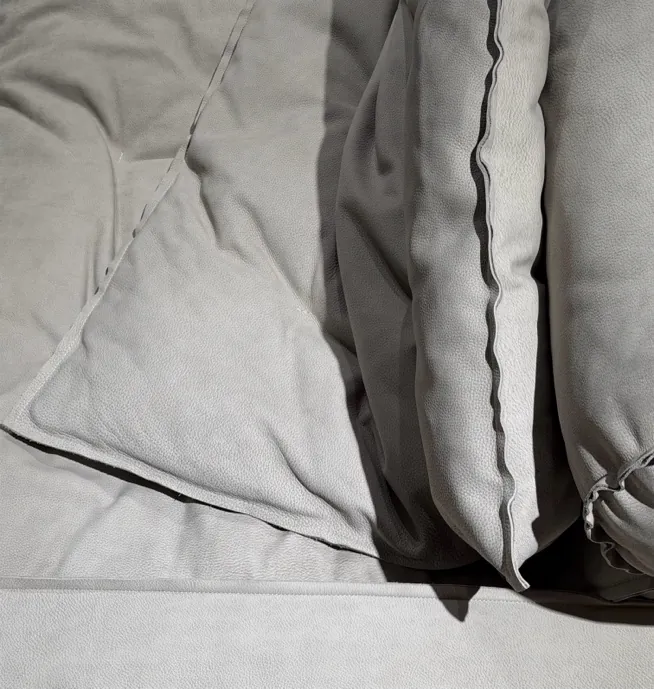
Within this context, the pieces themselves become secondary, but no less precise. The Jasper and Agora armchairs explore volume through surface tension. The Victor sofa, in its new lead-toned cashmere finish, feels quieter, more intimate. The Nadir bed has an architectural stillness, grounding the space.
Tables like the Lagos and Augar coffee tables act almost like interruptions — moments of reflection, both literally and visually.
The space
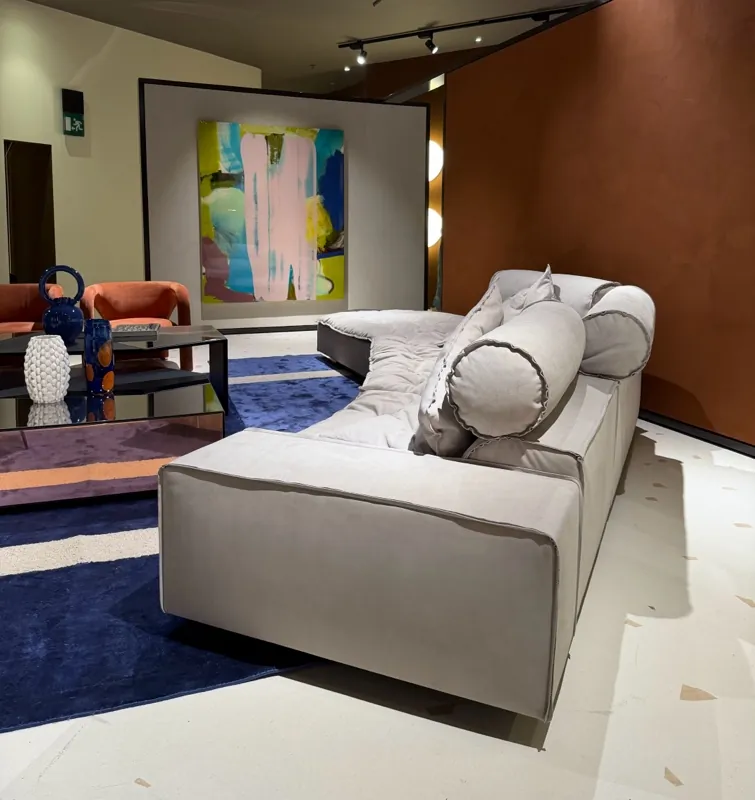
The layout reinforces this approach. Nothing is presented as a single focal point. Instead, the showroom unfolds in fragments — rooms within rooms, framed by mobile boiserie and filtered light.
You move slowly, not because you're asked to, but because the materials demand it.
A moving extension
At some point, the experience shifts outside. The Baxter tram moves through the city almost quietly, carrying the same atmosphere into a different context. Inside, the mood loosens — conversations overlap, there's a constant low murmur, people leaning in, glasses in hand. Cocktails circulate, small bites are passed around, and Milan unfolds beyond the windows in brief, shifting frames.
For a moment, the collection is no longer something you observe. It becomes something you're inside of — part social, part spatial, part cinematic.
The last layer
What stays with you isn't a specific piece, but a surface — a color that shifts, a texture that holds light differently depending on where you stand. Baxter's direction this year feels less about defining new forms and more about refining perception. Slower, more tactile, more aware. And in a week that often favors immediacy, that restraint feels deliberate.